
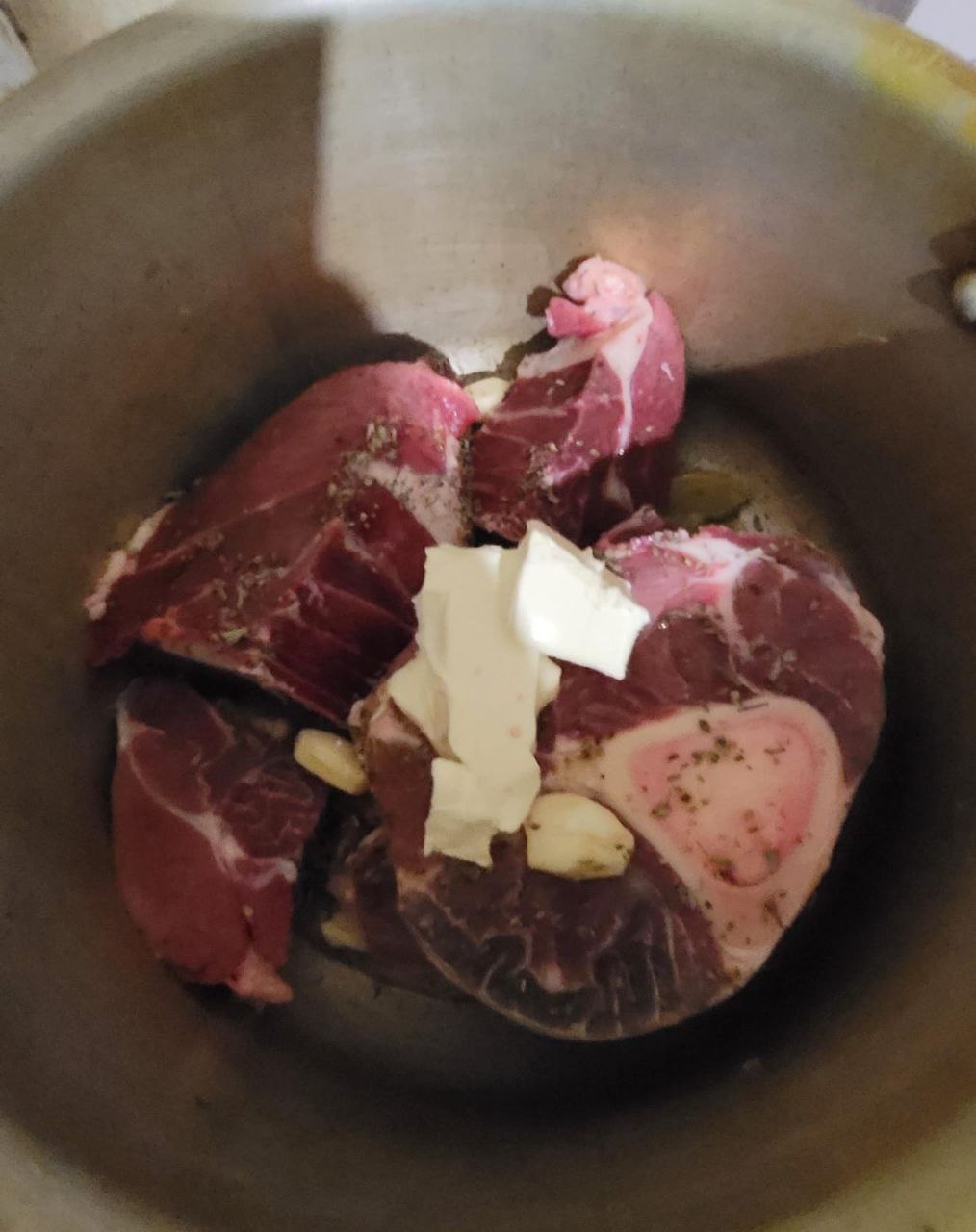
This is not just cooking. This is invocation.
The Power of the First Layer The image of raw meat nestled in a pot, kissed with butter and garlic, is more than preparation—it is poetry. It is the moment before transformation. The bones, with their marrow, carry stories. The fat, with its shimmer, holds memory. The garlic, crushed but fragrant, is the whisper of flavor to come.
Butter melts slowly, coating the meat in richness. It is not rushed. It is reverent.
The Wisdom of Bone-In Cuts In Moroccan cuisine, bone-in meat is prized—not just for flavor, but for soul. The marrow infuses the stew with depth. The connective tissue melts into silk. The bones themselves become vessels of warmth.
Oxtail, shank, and rib cuts are chosen not for convenience, but for character. They require time. They reward patience. They teach us that the best things cannot be hurried.
The Alchemy of Spice Black pepper is the first spark—sharp, grounding. Ginger adds heat and complexity. Turmeric brings color and earth. Cinnamon, if used, offers a whisper of sweetness. And saffron, rare and golden, turns the whole dish into a dream.
These spices are not just ingredients—they are history. They reflect centuries of trade, migration, and cultural fusion. They carry the scent of caravans, the echo of souks, the warmth of home.
The Role of Butter (and Smen) Butter in Moroccan cooking is not just fat—it is flavor. It softens, enriches, elevates. And when replaced with smen (aged, fermented butter), it adds a haunting depth—a taste of tradition, of time.
Smen is used sparingly, like perfume. A little goes a long way. It is the grandmother’s secret, the cook’s pride.
The Slow Simmer Once the meat is seasoned and kissed with butter, the pot is placed over low heat. The onions are added, melting into sweetness. The tomato joins, adding acidity and body. Water or broth is poured gently, creating a bath for transformation.
