
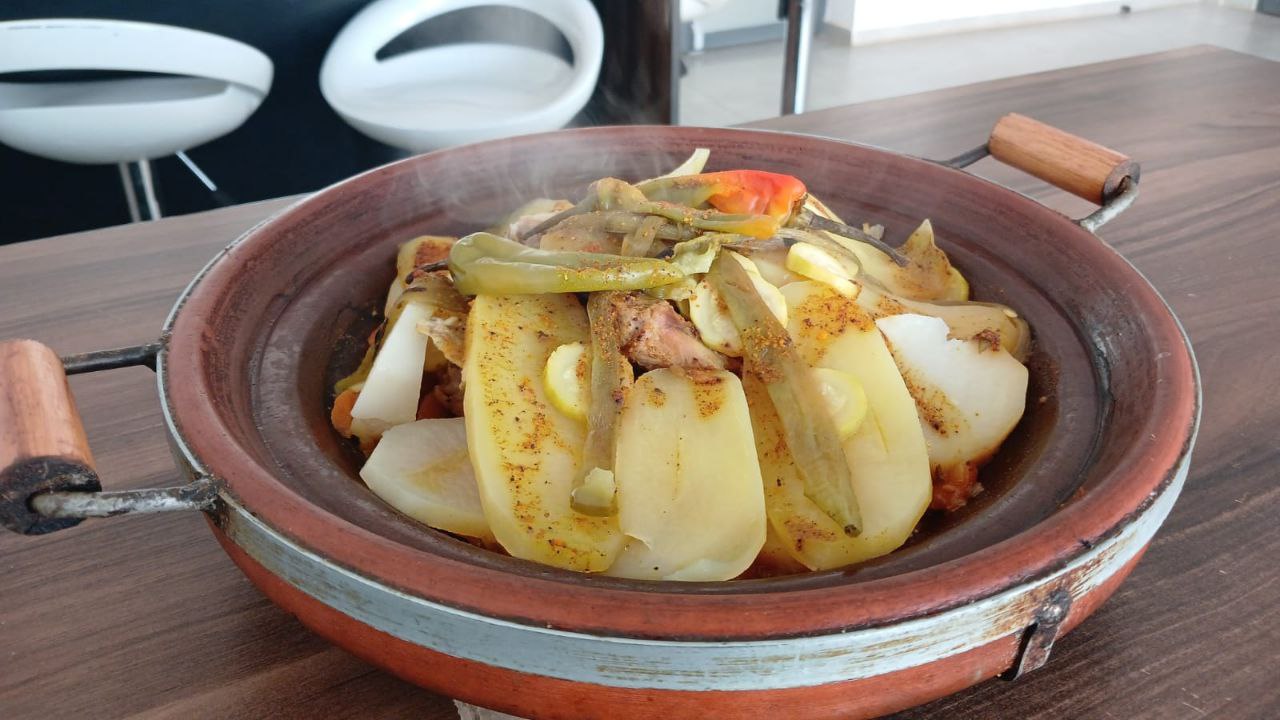
A Dish of Seasons The vegetable tagine is endlessly adaptable. In spring, it welcomes peas and artichokes. In summer, it embraces tomatoes and zucchini. In autumn, pumpkin and turnips take center stage. In winter, it leans into root vegetables and warmth.
It is a dish that listens to the land. That honors what is available. That celebrates simplicity.
The Poetry of Spice What makes the tagine magical is not just the vegetables—but the way they are seasoned. Turmeric adds golden depth. Paprika brings warmth. Ginger whispers of heat. Cumin grounds the dish. And saffron, if used, turns it into a dream.
These spices are not random. They are chosen with care. They reflect centuries of trade, migration, and cultural fusion. They tell stories of Berber roots, Arab influence, Andalusian echoes.
The Steam of Memory For many, the vegetable tagine evokes childhood. The sight of the clay pot on the stove. The sound of bubbling. The scent that fills the house. It is a dish that carries generations. That remembers.
And for those discovering it anew, it becomes a revelation. A reminder that food can be slow. That flavor can be deep. That nourishment is not only physical—it is emotional, spiritual, ancestral.
The Table as Sanctuary When the tagine is served, it is not just food—it is ceremony. The lid is lifted. The steam rises. The colors glow. Bread is torn by hand, dipped into the sauce, shared among loved ones.
There is no rush. There is laughter. There is silence. There is gratitude.
In Morocco, the tagine is not reserved for special occasions—it is the occasion.
Health and Wholeness Beyond its beauty, the vegetable tagine is nourishing. Packed with fiber, vitamins, and antioxidants, it supports digestion, immunity, and vitality. The olive oil provides healthy fats. The herbs offer cleansing properties. The spices aid circulation and warmth.
