
Optional: pinch of cinnamon or saffron threads
🍋 Flavor Enhancers
1 preserved lemon, quartered (optional)
A handful of green or black olives
Fresh parsley and cilantro, chopped
🫗 Liquid
½ cup water or vegetable broth
2 tablespoons olive oil
🍞 To Serve
Warm khobz (Moroccan bread) or fluffy couscous
Mint tea or laban (fermented milk) on the side
✨ Full Article: “Steam and Earth”
Where clay meets flame, and vegetables become vessels of memory…
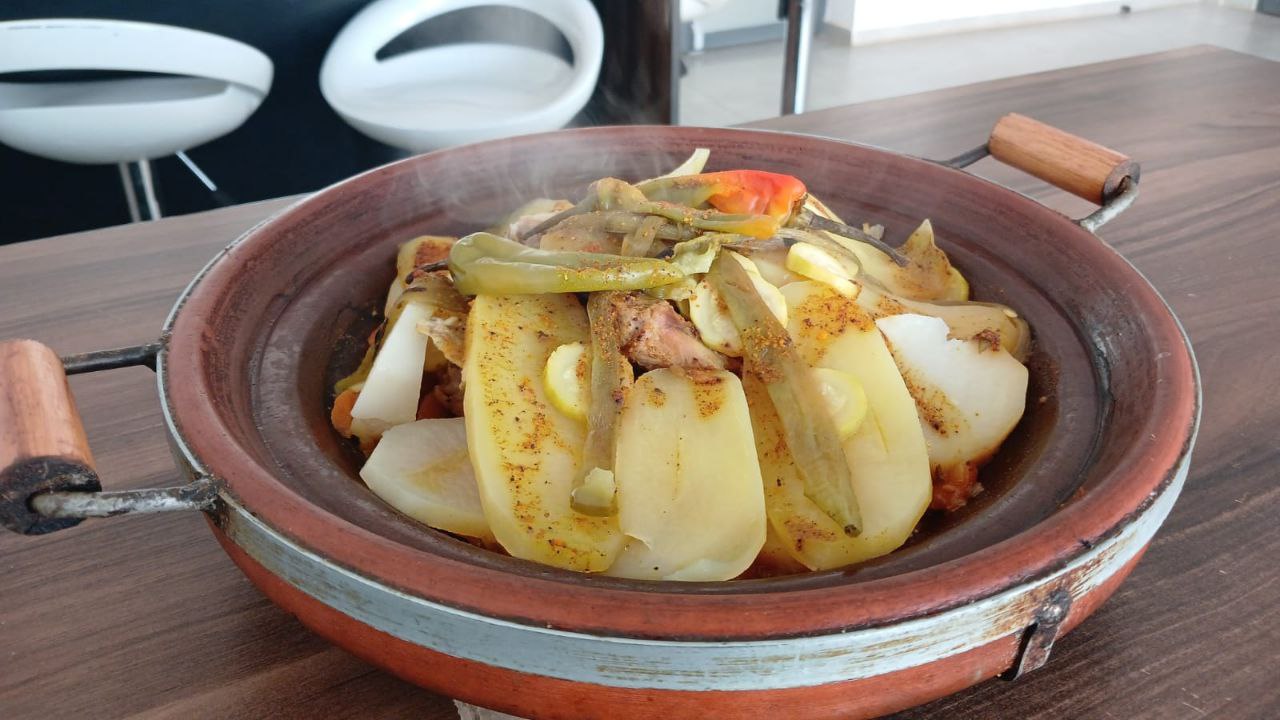
In the quiet rhythm of a Moroccan kitchen, where the scent of cumin lingers and the clay pot hums with heat, there simmers a dish that speaks of home. The vegetable tagine—humble, hearty, and healing—is more than a meal. It is a meditation.
It is the kind of dish that asks you to slow down. To listen. To feel.
The Wisdom of Clay The tagine pot, with its conical lid and earthy weight, is not just a cooking vessel—it is a philosophy. It teaches patience. It rewards care. It transforms raw vegetables into tender poetry through the slow dance of steam and spice.
The clay retains heat gently, evenly. It does not rush—it nurtures. And in that nurturing, flavors deepen. Textures soften. Aromas bloom.
The Ritual of Preparation To prepare a vegetable tagine is to engage in ritual. The vegetables are washed, peeled, sliced with intention. The spices are measured—not just for taste, but for balance. The garlic is crushed, the herbs chopped, the oil warmed.
Each step is a gesture of love. Each layer a note in a symphony.
The onion forms the base, releasing sweetness as it cooks. The carrots and potatoes offer substance. The zucchini and green beans bring freshness. The tomatoes melt into a sauce that binds everything together.
And above it all, the steam rises—carrying scent, memory, and promise.
