
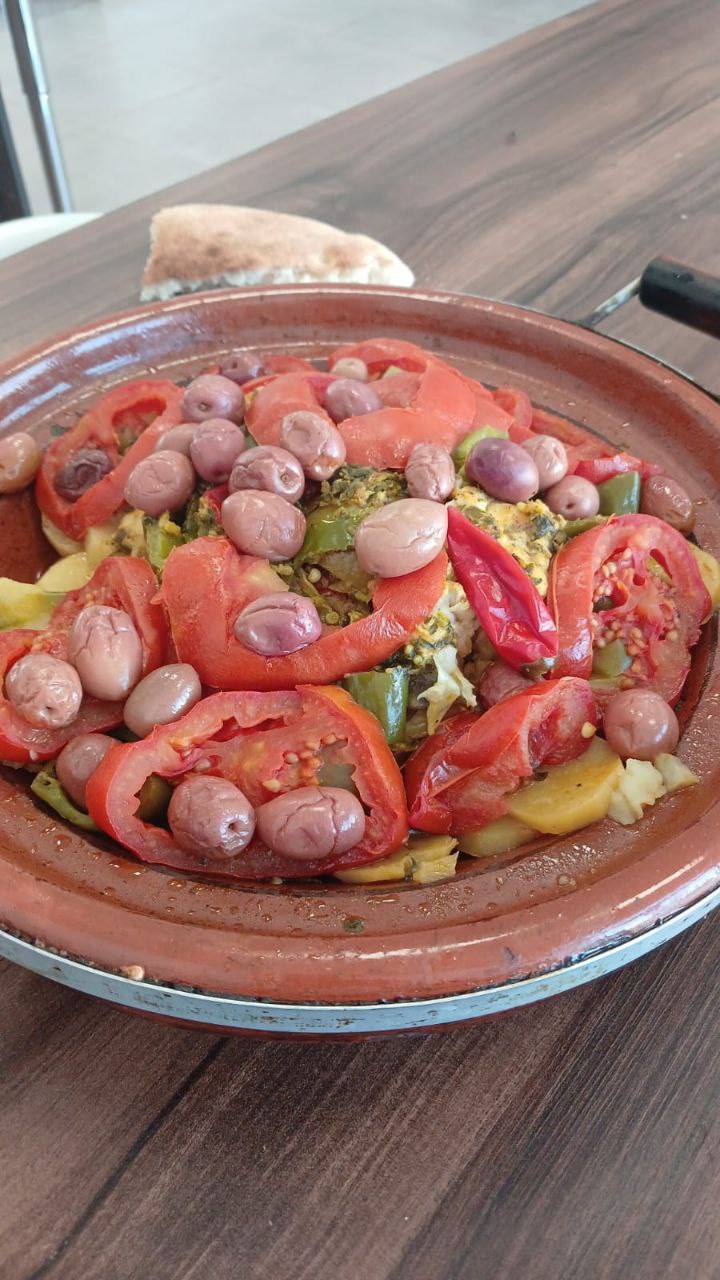
✨ Full Article: “Beneath the Clay”
Let me take you on a journey through scent, memory, and flame…
In the heart of Morocco, where the sun kisses the earth with golden warmth and the call to prayer dances through the air like poetry, there lies a vessel of ancient wisdom: the tagine. Not merely a pot, but a philosophy. A slow whisper of flavor. A clay cradle for stories told in steam.
The tagine is not rushed. It does not shout. It simmers. It waits. It teaches patience in a world that forgets how to pause.
The Geometry of Flavor The conical lid of the tagine is more than aesthetic—it is alchemy. It traps the rising steam, condenses it, and returns it to the dish, creating a cycle of moisture and flavor that transforms humble ingredients into something transcendent. Chicken becomes tender as silk. Vegetables melt into one another, their colors preserved like stained glass in a cathedral of spice.
A Ritual of Assembly To prepare a tagine is to compose a symphony. The chicken is first kissed by oil and spice, massaged with turmeric and ginger, laid gently into the clay. Then come the vegetables—tomatoes like rubies, peppers like stained glass, olives like punctuation marks in a love letter. Each layer is intentional. Each placement a gesture of care.
The preserved lemon, if used, adds a haunting brightness—like a memory of sunlight. The garlic whispers. The herbs sing. And the saffron, if you’re lucky enough to have it, paints everything in gold.
Fire and Time Traditionally, the tagine is placed over charcoal or a low flame. The heat is gentle, like a grandmother’s embrace. It does not scorch—it coaxes. Over hours, the dish transforms. The lid is rarely lifted. The cook trusts the process. There is wisdom in the waiting.
In modern kitchens, the tagine may sit atop a gas stove or even in the oven. But the spirit remains. It is not the flame that defines the tagine—it is the intention.
The Table as Sanctuary When the tagine is finally unveiled, it is not just food—it is ceremony. The steam rises like incense. The colors are vibrant, the aroma intoxicating. Bread is torn by hand, dipped into the sauce, shared among loved ones. There is no rush. There is laughter. There is silence. There is gratitude.
In Morocco, the tagine is not reserved for special occasions—it is the occasion. It is weekday comfort and weekend celebration. It is the taste of home, whether that home is a mountain village or a bustling medina.
A Dish of Memory For many, the tagine evokes childhood. The sound of bubbling clay. The scent of cumin in the air. The sight of a mother or father, bent over the pot, adding a final touch of parsley. It is a dish that carries generations. A dish that remembers.
